Pamoja AFCON 2027: The Diaspora Investment Briefing for East Africa’s Tournament Economy
African football has never had more global goodwill than it does right now. A record ten African teams qualified for the 2026 World Cup, nine reached the knockout stage against a previous record of two, and Cape Verde and Morocco have become the neutrals’ favourites worldwide. The next place that attention lands is Pamoja AFCON 2027 (19 June – 17 July 2027): the first Africa Cup of Nations co-hosted by three nations; Kenya, Uganda, and Tanzania. The first in East Africa since 1976, and backed by a proposed East Africa single visa. This briefing maps where Africa Cup of Nations tourism revenue will concentrate, and where diaspora investment in Africa can convert this moment into owned positions in the hospitality supply chain.
Executive Snapshot
- Momentum: Nine of ten African teams reached the 2026 World Cup knockout stage, a continental record. AFCON 2027 is the first property where that global goodwill can be converted on African soil.
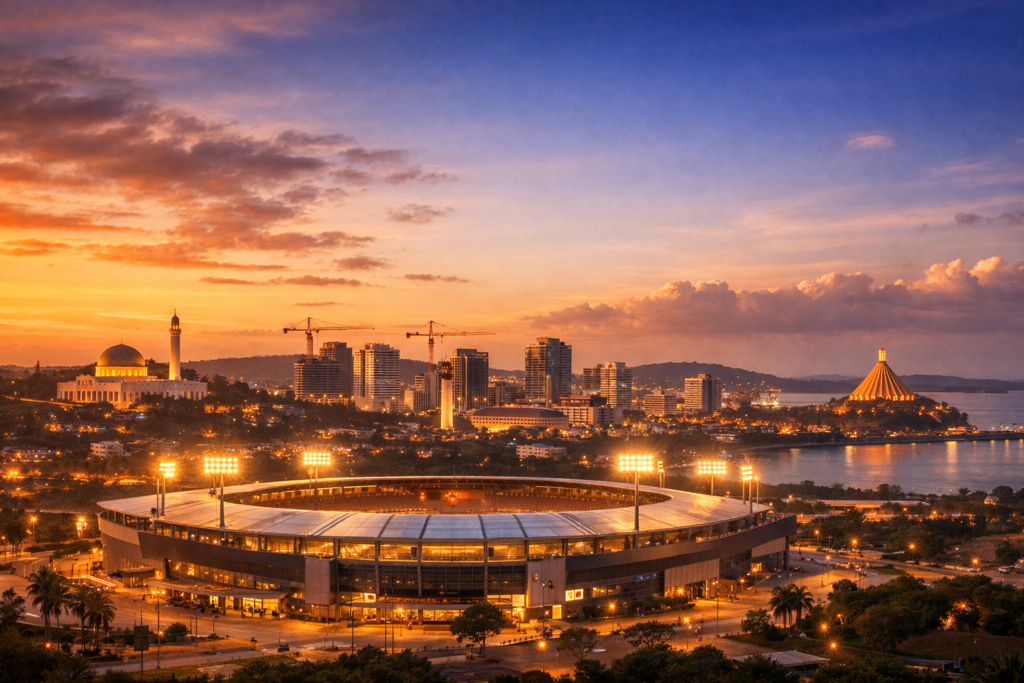
- Window: 19 June – 17 July 2027. 24 teams. Proposed match venues span Nairobi (Kasarani, 48,000; Talanta Sports City, 60,000), Greater Kampala (Mandela National Stadium), Hoima (Hoima City Stadium), Dar es Salaam (Benjamin Mkapa, 60,000), Arusha (Samia Suluhu Stadium, ~30,000), and Zanzibar (Fumba and Amaan stadiums) CAF has not yet issued a final confirmed venue list, so treat this as the working set.
- Demand: Ugandan officials project 500,000–650,000 tournament visitors into Uganda alone, at an estimated $1,000+ spend per visitor; a minimum $500 million injection. Tanzanian authorities have told hoteliers to prepare for roughly 300,000 tourists. Prior AFCON host cities have recorded hotel occupancy above 90%.
- Public capital already committed: ~$204 million for sports infrastructure in Kenya; ~$200 million allocated in Tanzania (including the Mkapa renovation and the new Arusha stadium); UGX 905 billion in newly approved AFCON funding in Uganda.
- Hard deadlines: CAF re-inspection 31 August 2026; host governments have set 31 December 2026 as the operational deadline for stadiums, airports, and access roads. Commercial positions; room blocks, supply contracts, licensing, venue partnerships —are being allocated on the same clock.
The 2026 World Cup Effect: Momentum With a Shelf Life
African football is having its strongest World Cup ever, and the commercial window it opens is short. The facts from the current tournament: a record ten African teams qualified, up from five in 2022; nine advanced to the knockout stage, against a previous all-time record of two; South Africa, Egypt, and DR Congo all reached the knockouts for the first time; and unbeaten debutants Cape Verde, the third-smallest nation ever at the tournament became the story of the group stage, holding Spain and eliminating Uruguay. More than a quarter of the knockout field was African.
Goodwill of this kind depreciates fast. How to monetize it while it is live:
- Sell AFCON 2027 now, not in 2027. Neutral fans who adopted Cape Verde or watched Morocco trade blows with elite sides are one campaign away from an East Africa trip. Launch packages, waitlists, and deposit schemes inside the World Cup news cycle, while African football owns the feed.
- Market continuity, not a new event. The pitch is simple: the teams the world just fell for play their home continental championship next; on African soil, across three countries, on one itinerary.
- Court the sponsors already activated. Brands that spent on African teams in North America this summer need a follow-on property. AFCON 2027 fan parks, hospitality inventory, and venue partnerships are the natural landing zone, and East African operators can open those conversations today.
- Bank diaspora travel intent. Deep World Cup runs convert diaspora pride into concrete trip planning. Capture it with pre-registration lists and early-bird pricing before attention rotates.
The East Africa Single Visa and Cross-Border Match-Day Logistics
Where the Single Visa Stands
The defining logistical variable of Pamoja AFCON 2027 is mobility. As of July 2026, Uganda’s President has formally endorsed a single East African entry visa for the tournament and directed consultations with Kenya and Tanzania. The proposal would allow fans, tourists, officials, and teams to circulate across all three host countries for up to four months on one permit.
The regional plumbing partly exists: Kenya, Uganda, and Rwanda already operate a joint tourist visa, with Tanzania the missing link. In parallel, Uganda has approved a full visa-fee waiver covering roughly one month before kickoff to one month after the final; Kenya’s ETA is free for most African nationals; Tanzania currently requires a standard e-visa. CAF’s tournament overview calls for a unified visa, or, a waiver for ticket holders to be operational by August 2026.
Planning position: structure tri-nation packages now on the assumption of frictionless movement, with a fallback itinerary costed on separate entry requirements. Operators who wait for final gazettement will be selling into a saturated market.
Tri-City Logistics: Kampala–Nairobi–Dar es Salaam
- Flight times are short: roughly 1h15 Nairobi–Entebbe, 1h20 Nairobi–Dar es Salaam, and 1h45 Entebbe–Dar. To match that pace, CAF’s milestone plan requires increased flight frequencies and shuttle agreements between the national carriers, plus fast-tracked customs for equipment and sponsor materials.
- Ground infrastructure is being purpose-built: the Kabalega International Airport passenger terminal and the 148 km Busunju–Kiboga–Hoima road corridor anchor Uganda’s western venue; Kenya is planning rail mobility between match venues.
- The operator opportunity is guaranteed-transfer products: airport–hotel–stadium movements with fixed time windows, licensed fleets, and bilingual staff. AFCON’s largest travelling fan blocs are historically francophone; French-speaking drivers and concierges are a revenue feature, not a nicety.
The VIP Match-Day Product
CAF’s venue specifications require each stadium to carry a minimum of 12 skyboxes and hospitality lounges for approximately 500 guests, alongside VIP and VVIP zones. That is a defined, sellable premium inventory. The executable package is: hospitality seat + vetted transfer + premium accommodation + curated evening programme, sold as one contract. Pricing benchmarks from Morocco’s AFCON 2025 hospitality tiers provide the reference market.
Safari Integration: Converting Africa Cup of Nations Tourism into Tour Revenue
The Match-Gap Window
Group-stage rhythm gives a travelling supporter 2–4 idle days between fixtures. That gap is the product. The geography is unusually favourable:
- Arusha sits at the mouth of Tanzania’s northern circuit. Tanzania’s Prime Minister has stated that a fan attending a match in Arusha can reach a national park within 20–30 minutes and Ngorongoro within 40–60 minutes, football and wildlife in a single package, marketed digitally and through embassies.
- Dar es Salaam feeds Mikumi and Nyerere (Selous) for 48–72 hour road or fly-in circuits, plus Zanzibar beach extensions.
- Nairobi offers the only capital-city national park on earth for half-day products, with Amboseli by road and the Maasai Mara by 45-minute fly-in for two-night packages.
- Hoima is the gateway to Murchison Falls, a venue city with a flagship park effectively next door.
TANAPA’s Fan-to-Tourist Conversion Strategy
Tanzania National Parks (TANAPA) has made the conversion explicit. The authority is redesigning visitor experiences in parks near host cities, establishing official match watch zones inside parks, and managing visitor capacity for the expected surge in sports tourism. At the product level, Lake Manyara (126 km from Arusha) is commissioning five new adventure additions: a zip line, a giant swing, canoeing, a canopy walkway, and Rift Valley escarpment trails. These are built specifically for visitors with a sporting mindset. In parallel, TANAPA is inviting private capital into luxury accommodation in the Marang’ Forest area, and government has floated park-adjacent team training camps. For Tanzania safari tours, this is a state-backed demand pipeline; the national target is 8 million tourists by 2030, with AFCON as the accelerant.
Execution Requirements for Operators
- Pre-position vehicle fleets and licensed guides in Arusha, Dar, Nairobi, and Hoima before Q1 2027; capacity, not demand, will be the constraint.
- Build itineraries against the knockout bracket: refundable or re-routable products tied to a team’s progression outperform fixed departures.
- Lock park access, lodge allotments, and insurance now. High-yield inventory (Mara fly-ins, Ngorongoro crater slots, gorilla permits in Uganda) sells out structurally, not seasonally.
- Model the margin before committing capital: run projected package pricing through the AFCON 2027 Tour Profit Calculator to stress-test rates against occupancy, group size, and knockout-stage cancellation risk.

Urban Hospitality: Front-Office Standards and Premium Nightlife
Front-Office Operations Decide Revenue Capture
Tournament demand is won at reception desks, not in marketing decks. The operational baseline for host-city properties:
- Disciplined PMS and channel management with hard overbooking controls during match clusters; a 40-minute check-in queue redirects a fan’s next-city booking to a competitor.
- Payment redundancy: international cards, M-Pesa and mobile money, and transparent forex handling, with offline fallbacks.
- Bilingual (English/French) front-of-house rosters and trained night teams — match days end at midnight; revenue does not.
- Verified security and guest-screening protocols that meet the standards of CAF-accredited room blocks, which are being audited for capacity and price integrity.
Kampala Premium Nightlife: The Underbuilt Tier
Kampala’s late-night economy is a genuine regional differentiator, and Nairobi’s Westlands and Dar’s Masaki–Coco Beach corridors carry comparable energy. What is underbuilt across all three cities is the premium tier: venues with international bottle-service standards, certified crowd security, controlled capacity, published pricing, and integrated safe late-night transport. During a month when hundreds of thousands of visitors hold disposable evening budgets, Kampala premium nightlife executed to international standards, is one of the highest-margin, fastest-payback positions in the tournament economy. The same thesis holds for licensed fan parks and 24-hour trading zones, which Tanzania is already formalising around stadiums.

Economic Infrastructure and B2B Execution: The Diaspora Investment Case
Kenya Hospitality Investment and the Regional Room-Stock Gap
Every host government has acknowledged the same constraint: not enough modern rooms. Dar es Salaam’s Regional Commissioner has publicly framed the hotel shortage as a direct investment opportunity, and Tanzanian economists have warned that if local and diaspora capital does not take the mid-range and budget segments, the gains leak to large foreign operators. Uganda is financing the response, twelve hospitality sites are under development in the Hoima region alone, supported by concessional loans, including a five-star redevelopment. For Kenya hospitality investment, the practical SME-scale entries are serviced apartments, aparthotel conversions, and refurbishment joint ventures in Nairobi’s stadium-access corridors, assets that earn tournament rates in 2027 and corporate/leisure rates after.
Local Food Supply Chains
A month of 90%+ occupancy multiplies hotel and venue F&B demand. Import-dependent kitchens are a margin leak and a fragility. Standing supply contracts — poultry, eggs, horticulture, dairy — between diaspora-backed farms and hotel groups, with cold-chain and certification in place before Q2 2027, convert tournament demand into multi-year agribusiness revenue. This is the exact SME profile the region’s diaspora investment frameworks are built around: modest capital, local partnership, verifiable employment.
Commercial Real Estate and Stadium Precincts
Tournament-grade infrastructure reprices land. The Talanta Sports City corridor in Nairobi, the Namboole precinct in Greater Kampala, Hoima’s new road-and-airport spine, and Arusha’s stadium zone are where mixed-use, retail, and hospitality real estate acquire a durable demand floor. The tournament is the catalyst; the asset thesis is the decade after.
B2B Execution Rules
- Partner, don’t parachute. Tour, liquor, transport, and venue licences are locally gated. Documented joint ventures with licensed Kenyan, Ugandan, and Tanzanian operators are the entry mechanism, and the governance discipline (KYC, independent valuation, written profit-sharing) that protects both sides.
- Cost the imports before committing. Hospitality fit-outs, vehicles, and kitchen equipment carry duty and levy structures that break naive budgets; run landed costs through the Kenya Import Duty Calculator before signing supplier contracts.
- Contract to the CAF calendar. August 2026 certification and December 2026 operational deadlines mean procurement, room blocks, and venue partnerships are being locked over the next two quarters, not in 2027.
The Pamoja AFCON 2027 Window: Move from Fan to Stakeholder
Pamoja AFCON 2027 will put East Africa in front of a global broadcast audience projected in the billions and physically deliver several hundred thousand visitors into three economies over 30 days. Passive tourism captures none of that. The strategic posture for Pan-African and diaspora stakeholders is direct:
- Invest in the supply chain: rooms, food systems, transport, premium venues — not just the spectacle.
- Partner with licensed local operators now: while allocations, licences, and concessional financing windows remain open.
- Sell while the world is watching: The goodwill generated at the 2026 World Cup is a perishable asset. Packages, sponsor conversations, and supplier contracts opened during this cycle will cost 2027 prices if opened later.
Background reading: the ADSII framework outlines the local-partnership and governance structures referenced in this briefing.
The tournament lasts a month. The positions taken before it will define diaspora participation in East Africa’s hospitality economy for a decade.